


The differences between these species should be respected, as they all require different care and forms of removal.
In Maryland, we see a lot of turtles. There really aren’t that many species that live here natively; out of 244 total species on Earth, only 19 can be found in Maryland, including land and sea turtles. The differences between these species should be respected, as they all require different care and forms of removal. At Shumaker, we are professionals who know how to handle getting rid of turtles that form homes on your property. You’re probably afraid of hitting them with your lawn mower by accident, or your dog getting to them. But when the turtle snaps back, you might be worried about your kids or your dog finding one. Here’s how to tell if you’ve got a snapping turtle problem.
How do I know it’s not a box turtle?
Box turtles are actually harmless, and you’re more of a threat to them than they are to you. These turtles are not amphibious, which is a common mistake, and placing them in the water can drown them. You’ll find these turtles at pet stores, so if you’re interested in housing one of them, you should read into it first and ask a local pet shop about the parameters. Box turtles are small, just a few inches across, and can curl into themselves for protection. They prefer sunny areas where they can bask, as well as shade. You should only move one if you see it crossing the road, just by picking it up gently and moving it to the other side. They will return every year to your yard if you provide them with the right requirements.
How do I know if it’s a snapping turtle?
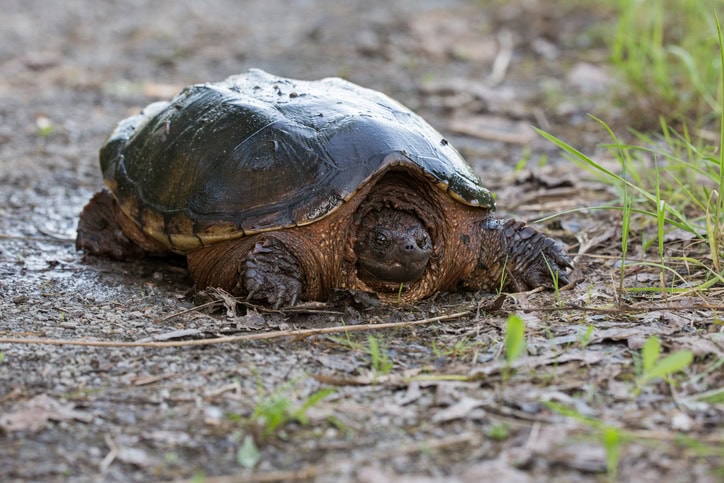
In Maryland, we only see one of two species of snapping turtles, so they’re easy to spot. They can grow to be huge, which will make them easy to differentiate, as the only other large turtles we have live in the ocean. Distinct features of snapping turtles include a spiky shell and a long, armored tail. Their eyes look a bit different, as well, almost sunken in. They live near brackish waters, and will eat anything.
Why should I call Shumaker’s Animal Control?
You should never move a snapping turtle on your own. These guys have long, flexible necks that can reach around and easily snap at fingers holding the sides of its shell. They can also get pretty heavy; dropping one can seriously hurt it. Snapping turtles also can’t pull their legs or head into their shells, so they are at a high risk for being harmed if they’re in the road as they can’t protect themselves from a car. They will snap at anyone and anything, so curious children and dogs are especially in danger. A snapping turtle’s bite is furious, and can cause significant injury, especially if they are an adult.
Top 4 Most Interesting Facts About Snapping Turtles
1. Strong Bite, But Not for Hunting

Top 4 Most Interesting Facts About Snapping Turtles
Their bite is strong enough to break through bone, but they don’t use it for chasing prey. Instead, snapping turtles are ambush predators. They stay still in the water and wait for fish or other animals to get close. When something comes near, they snap quickly. This is more about defense and catching food than aggression.
2. Ancient Species That Hasn’t Changed Much
Snapping turtles have existed in nearly the same form for over 90 million years. Their body structure—large shell, long tail, and tough skin—has helped them survive many changes in the environment. This stability makes them one of the longest-surviving reptile species still alive today.
3. They Can Breathe Through Their Butts
During winter, snapping turtles hibernate underwater. When they do, they can absorb oxygen through their cloaca—a multi-purpose opening used for excretion and reproduction. This helps them survive months without coming up for air, especially when lakes or ponds freeze over.
4. They’re Not Great at Moving on Land
Snapping turtles are built for the water. On land, they move slowly and awkwardly. Still, females will travel significant distances to find a good spot to lay eggs—often sandy or loose soil. After laying up to 50 eggs, they leave the nest and don’t return. The hatchlings are on their own from the start.
These facts show how snapping turtles are well adapted to their environment and surprisingly complex in their behavior.
If you’ve got a snapping turtle problem in your yard and don’t know what to do with it, call Shumaker’s Animal Control. We will remove him and place him somewhere safe, where he’ll be much happier!
Shumaker’s Animal Control is a twenty-five-year veteran of the animal and pest control profession. We are the Kingsville rodent control experts and can help you return your house to a cozy pest-free home. If you have any questions about turtle removal or any other animal control, contact Shumaker’s Animal Control by calling (443) 854-8072 or click here today!
You can also follow us on our blog, Facebook, Twitter, Google+, and Pinterest.


