


Not only are they creepy, but bats can be dangerous to humans in a number of ways!
Bats have a reputation of being sinister creatures, with their association with the afterlife, Halloween, and darkness in general. Although the reasons may be mostly fictional, we should take caution around bats for other, very real reasons. Animal control professionals are your best defense against bats in your home and will help you solve your problem in the safest and most humane way.
The Diseases They Carry
Bats don’t pose an immediate, physical threat, but they can be harmful to your health in many other ways. Rabies is probably the most commonly known disease transmitted by animals. However, you don’t have to be bitten to contract rabies; bats carry the viral disease in their saliva which could be transferred through the eyes, mouth, or open wounds. Bat droppings, called guano, can also be problematic. They can contaminate soil and cause infectious spores to be released into the air if the soil is disturbed by your dog or even during gardening. The most potentially dangerous disease directly linked to bats is called Histoplasmosis. It is a type of lung infection that could affect other organs as well. Although the symptoms of this disease do vary, it can be fatal if left untreated.
Effects On Your Home
Seeing one bat inside or near your home just means that there are several more somewhere else. Bats are not lonely animals; they travel and live with groups. Seeing one bat near your home is a sign that there is a colony somewhere on your property. These colonies find their way into attics and basements through holes and even open windows. These colonies won’t pose a physical threat to your or your family but they can, however, cause some structural damage to your home. The bats are looking for shelter and are more than likely just as confused as you are about how they found their way into your home. After getting rid of the colony, check the status of your siding, chimney, and walls for any damage.
Our Top 5 Most Interesting Facts About Bats
1. Bats Are the Only Mammals That Can Truly Fly
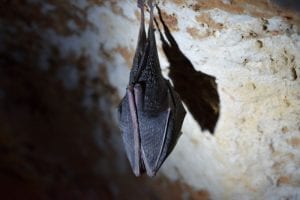
Our Top 5 Most Interesting Facts About Bats
Unlike flying squirrels or gliding lemurs, bats don’t just glide. They flap their wings and control their movement in the air with great precision. Their wings are made of a thin membrane stretched over elongated finger bones, allowing for agile and controlled flight.
2. Some Bats Use Sound to “See” in the Dark
Many species of bats use echolocation. They emit high-pitched sounds that bounce off objects and return to them, helping the bats figure out what’s around them. This system is accurate enough to help them catch insects mid-flight in total darkness.
3. Bats Can Eat Thousands of Insects in One Night
Some bats feed almost entirely on insects. A single little brown bat can eat hundreds of mosquitoes per hour. This makes them helpful in controlling insect populations, especially in farming areas.
4. Not All Bats Eat the Same Thing
Bats have a wide range of diets. While many eat insects, others eat fruit, nectar, or even small animals. There are also a few species known for drinking small amounts of blood from livestock. These vampire bats are found only in Central and South America.
5. Bats Live a Surprisingly Long Time for Their Size
Small mammals usually don’t live very long, but some bats can live more than 30 years. One recorded bat lived over 40 years in the wild. This is unusual for animals of their size and has made bats a subject of research on aging.
Have an Animal Inside of Your Home That Shouldn’t Be There? Give Us a Call!
Shumaker’s Animal Control has over 25 years of experience in the animal and pest control field. Whatever your problem, we can help remedy the situation and restore your home (or yard) back to normal. Give us a call at (443) 854-8072 or contact us online today to see how we can help you! For more information on household and neighborhood pests and how to protect your family, follow us on Facebook, Twitter, Pinterest, and Google+.


