


Protect your plants from these furry critters.
Squirrels are one of the most common annoyances for homeowners throughout Maryland, D.C., and Virginia. The tiny bushy-tailed animals are known for destroying gardens, damaging plants, and ruining landscaping. It is amazing how these animals can wreak havoc for people. If you want to protect your plants from squirrels, here’s what you need to know.
Plant Unappetizing Flowers
This tip might seem like caving to squirrels, but it is the most practical way to get squirrels to stop bothering your plants. There are many flowers and plants that squirrels do not like thanks to their taste and their smell. Some of the flowers include alliums, crocus, lilies, marigolds, hyacinth, daffodils, and geraniums. If you have a major squirrel problem and other control methods seem to be a drop in a bucket, planting flowers that they won’t eat is a great solution. In most cases, these plants aren’t typically expensive and can be picked up at most nurseries.
Lay Chicken Wire
Chicken wire helps to prevent squirrels from digging, which is something that they might do around flowers or plants that they aren’t even attracted to. You won’t need to worry about squirrels digging in your potted plants, either, if you simply place some chicken wire beneath the top surface as you plant.
Cayenne Pepper
Cayenne pepper is a spicy way to keep squirrels away from your precious plants and flowers. Instead of calling animal control, some gardeners take cayenne pepper (like you would find in the spice aisle at the grocery store) and sprinkle it around their flowers. The moment that the squirrel gets a taste, their mouths will be spicy and uncomfortable. Many gardeners have found that this trick keeps squirrels away after only a single use, so if you want a big impact in a short amount of time, it’s probably your best bet. It’s important to not use this method if you have pets that get outside, however, as they could also ingest the cayenne pepper and suffer from discomfort or a sneeze or two.
Top 5 Plants That Squirrels Target in Home Gardens
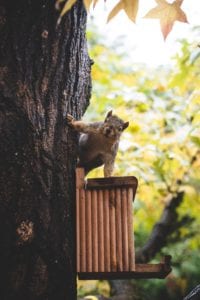
Top 5 Plants That Squirrels Target in Home Gardens
Squirrels are notorious for raiding gardens, often damaging plants in search of food. Here are five plants they frequently target and why they are so appealing.
1. Tomatoes
Tomatoes attract squirrels because they provide a juicy and hydrating snack. Squirrels often take a few bites out of each fruit rather than consuming a whole one, leaving behind damaged produce.
2. Sunflowers
Sunflower seeds are a favorite food source for squirrels. They will climb the stalks and chew through flower heads to reach the seeds, often causing extensive damage to the plant.
3. Strawberries
Squirrels are drawn to the sweet, ripe berries and will eat them directly from the plant. Their small size makes them easy for squirrels to carry off, leading to significant losses in strawberry harvests.
4. Corn
Sweet corn is highly attractive to squirrels, who will strip the kernels from the cob before they fully mature. They may also break stalks in the process, ruining an entire plant.
5. Nuts and Fruit Trees
Trees that produce nuts, such as walnuts and pecans, or fruit like apples and peaches, are prime targets. Squirrels gather these foods for immediate consumption or storage, often taking unripe fruit and causing premature losses.
Have an Animal Inside of Your Home That Shouldn’t Be There? Give Us a Call!
Shumaker’s Animal Control has over 25 years of experience in the animal and pest control field. Whatever your problem, we can help remedy the situation and restore your home (or yard) back to normal. Give us a call at (443) 854-8072 or contact us online today to see how we can help you! For more information on household and neighborhood pests and how to protect your family, follow us on Facebook, Twitter, and Pinterest.


